Green Clover Seamless Patterns Clipart: A Practical Guide to Integration and Execution
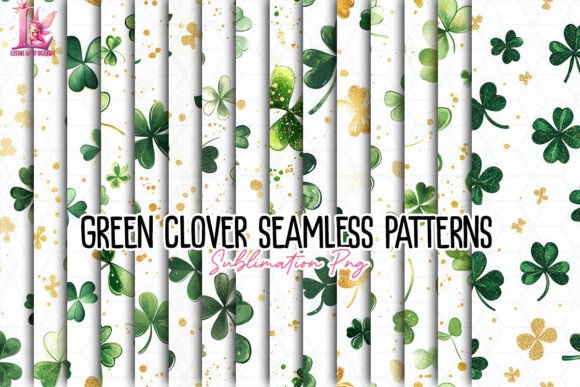
In the landscape of digital design and small business operations, visual consistency is not merely an aesthetic choice; it is a foundational element of brand identity and user experience. For creators, entrepreneurs, and marketers, the ability to produce high-quality, cohesive materials quickly is often the difference between a polished professional output and a disjointed amateur project. This is where specialized assets like Green Clover Seamless Patterns Clipart become indispensable tools in your workflow. These are not just decorative images; they are scalable, repeatable structural elements that can streamline the production process for a wide variety of physical and digital products.
The specific asset described—a high-resolution PNG file measuring 4500 x 5400 pixels at 300 DPI—represents a significant upgrade in utility compared to standard low-resolution clipart. Understanding how to leverage this specific format requires a shift from viewing graphics as static images to viewing them as modular components of a larger production pipeline. Whether you are designing merchandise for an e-commerce store, creating educational materials, or planning a themed event, integrating seamless patterns effectively can drastically reduce turnaround times while increasing perceived value.
Understanding the Asset: Resolution and Format Implications
To implement this asset effectively, one must first understand the technical specifications provided. The mention of a PNG file with dimensions of 4500 x 5400 pixels at 300 DPI indicates a focus on print-ready quality. In professional workflows, DPI (dots per inch) is critical when moving from digital mockups to physical production. A resolution of 300 DPI ensures that when the pattern is tiled across a surface, the edges remain crisp and free from pixelation, which is essential for items like mugs, t-shirts, and framed artwork.
The PNG format further enhances usability by supporting transparency. While seamless patterns are often used as background textures, the ability to isolate the clover motifs if necessary allows for greater flexibility during the design phase. However, the primary strength here lies in the "seamless" nature of the pattern. This means the image is engineered so that when it repeats horizontally and vertically, there are no visible breaks or mismatches at the seams. This eliminates the need for manual editing to hide tile boundaries, a common pain point in graphic design workflows.
Pre-Production Planning and Workflow Integration
Integrating Green Clover Seamless Patterns Clipart into a project begins long before the actual design work starts. It requires strategic planning regarding where and how the pattern will be applied. For small business owners and hobbyists alike, the preparation phase involves determining the scale of repetition. Because the source file is large (4500 x 5400 pixels), you have the freedom to zoom out significantly without losing quality. This allows for designs where the clovers appear smaller and more densely packed, creating a rich texture suitable for backgrounds.
Conversely, if you desire a bolder look with larger individual clovers, you can crop the pattern or use only a portion of the tile. This decision impacts the overall visual weight of the final product. For instance, in scrapbooking or card making, a denser pattern might overwhelm handwritten text, whereas a sparser arrangement could serve as a subtle backdrop. Evaluating these options during the planning stage prevents costly reprints and wasted materials.
- Define the End Product: Determine if the item is primarily digital (web graphics, social media posts) or physical (sublimated apparel, printed stickers). Physical items require stricter adherence to the 300 DPI standard.
- Assess Color Compatibility: Ensure the green tones of the clover pattern align with your existing brand palette or thematic requirements. Seamless patterns should complement, not clash with, other elements.
- Check Software Capabilities: Verify that your design software (such as Adobe Illustrator, Photoshop, Canva, or Affinity Designer) supports high-resolution PNG imports and has robust tiling or clipping mask features.
Execution: Technical Implementation Strategies
Once the plan is set, the execution phase involves placing the Green Clover Seamless Patterns Clipart into your design environment. The process varies slightly depending on the tool, but the core principles remain consistent: maintain aspect ratio, ensure proper tiling, and manage file size.
For vector-based workflows using software like Adobe Illustrator, importing the PNG may require rasterizing it, which locks the resolution. However, because the source is already high-res (300 DPI), this is rarely an issue unless extreme scaling is required. For raster-based workflows in Photoshop, you can utilize the "Pattern Stamp Tool" or simply place the image as a layer and adjust its blending mode. If you are working with sublimation printers, the seamless nature of the PNG is crucial. You must ensure that the canvas size matches the printable area of your blank product (e.g., a 12x16 inch mug wrap) and that the pattern tiles correctly across the curved surface.
A practical tip for maintaining efficiency is to create a reusable library of your most-used patterns. Once you have successfully tiled the Green Clover Seamless Patterns Clipart to your satisfaction, save the resulting composite as a new asset. This reduces repetitive work for future projects. Additionally, always keep the original 4500 x 5400 pixel PNG untouched in a master folder. This preserves your ability to generate new variations or higher-resolution outputs later, adhering to good data hygiene practices.
Diverse Use Cases Across Industries
The versatility of this clipart extends across multiple sectors, each requiring a tailored approach to implementation.
E-commerce and Merchandising
For entrepreneurs selling physical goods, this pattern is ideal for sublimation products. T-shirts, pillows, and tote bags benefit from all-over prints where the pattern covers the entire fabric. The high resolution ensures that the transition from sleeve to body, or from front to back, remains visually continuous. Stickers are another high-margin product category where this pattern excels. Since stickers are often small, the detail of the clovers remains sharp, adding a premium feel to simple die-cut shapes.
Education and Publishing
Educators and bloggers can utilize this asset to create engaging learning materials. Worksheets, certificates, and classroom decorations often require thematic consistency. A green clover theme is particularly effective for topics related to nature, luck, finance, or Irish culture. By using the seamless pattern as a header or footer background, teachers can create branded worksheets that look professionally designed without spending hours on layout. The PNG format also allows for easy insertion into word processing documents or presentation slides.
Event Planning and Personal Projects
Hobbyists planning St. Patrick’s Day events or spring-themed gatherings can use this clipart for invitations, banners, and party favors. The ability to print on physical products like cards and frame artwork means you can create personalized gifts. For example, framing a section of the pattern as minimalist art provides a modern decor option that is both affordable and unique. The scalability of the PNG allows you to experiment with different layouts, focusing on symmetry or asymmetry to match the desired mood of the event.
Maintenance and Long-Term Usability
Implementing digital assets is not a one-time task but part of an ongoing creative process. To maximize the value of the Green Clover Seamless Patterns Clipart, consider factors such as file organization and version control. Store the original PNG in a clearly labeled directory, perhaps within a broader "Assets" or "Graphics Library" folder. Tagging files with metadata such as "seamless," "green," "clover," and "high-res" can save significant time when searching for resources in future projects.
Furthermore, stay aware of platform-specific requirements. Social media platforms compress images, which can degrade the quality of your seamless patterns if not managed correctly. Always export final web graphics at the appropriate resolution and format (often JPEG or WebP for better compression) while keeping the original PNG for print purposes. This dual-format strategy ensures consistency across all touchpoints, from Instagram posts to physical packaging.
Conclusion on Practical Application
The true value of Green Clover Seamless Patterns Clipart lies not just in its visual appeal, but in its ability to simplify complex design tasks. By providing a high-resolution, transparent, and seamlessly tiling asset, it removes technical barriers that often slow down creative workflows. For professionals and hobbyists alike, adopting a structured approach to using this asset—starting with careful planning, moving through precise technical execution, and ending with organized archiving—ensures that every project benefits from a consistent, high-quality aesthetic. Whether you are producing a batch of custom mugs for a corporate gift or designing a series of educational cards, this clipart serves as a reliable foundation for efficient and impactful visual communication.